Archive

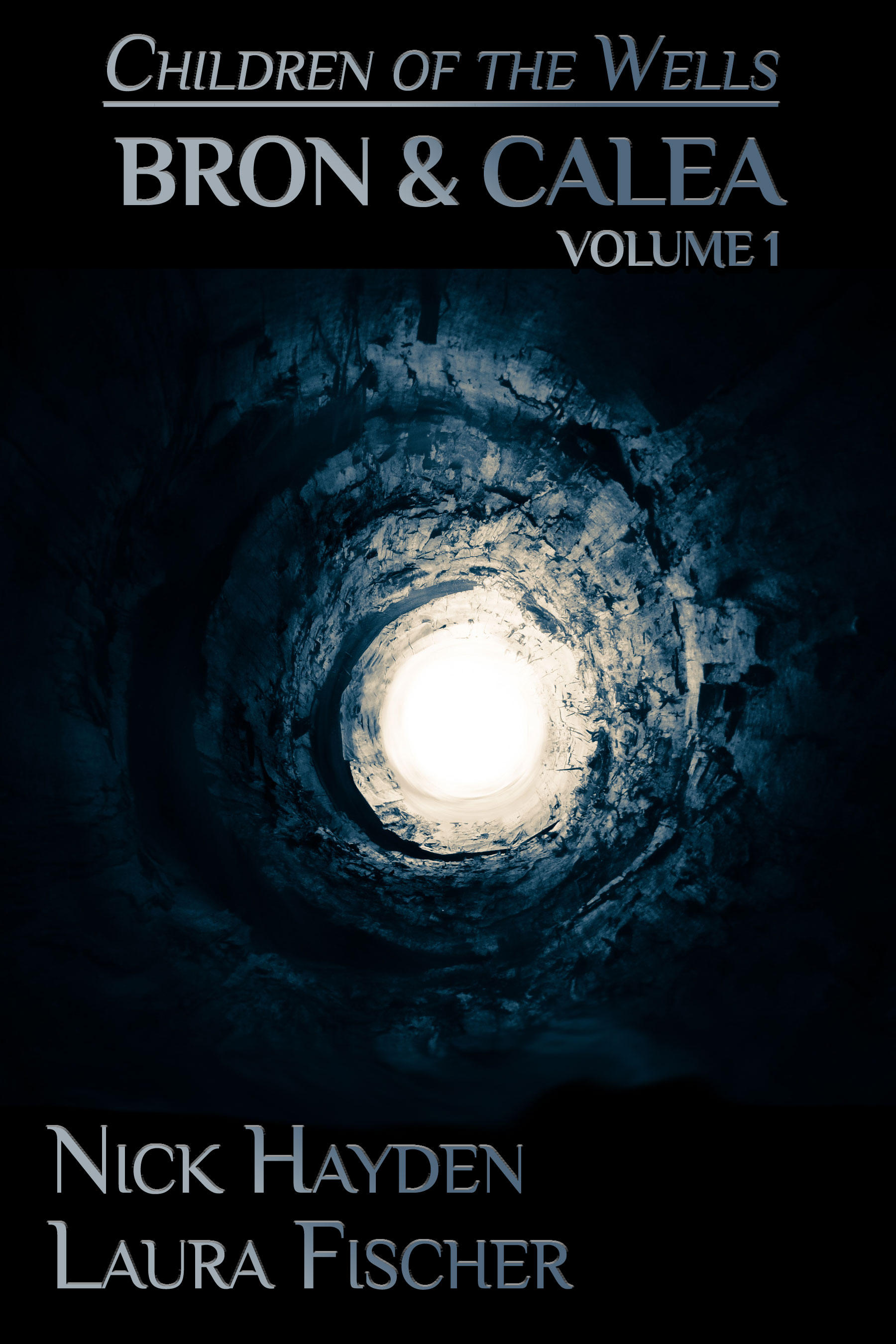
Bron & Calea Volume 1

Bron-vol1-final

The first three novels of Bron & Calea — The Select’s Bodyguard, The Doctor’s Assistant, and The Well’s Orphan–are now available in one print volume on Amazon!

The back cover copy:

When Bron, bodyguard to the Select, is jolted awake by an explosion, he quickly discovers that the entire city of Jalseion is in flames. Everywhere, people are dead, buildings collapsed, whole neighborhoods demolished. The scientific center of the world…burning to the ground. And the Select, those who rule through the magic in the wells? Where are they, and what has happened to the magic that powers the city? Bron banishes fear and uncertainty as he crosses the rubble with one goal: to find her. Finding her is only the beginning. With the world turned upside down, he’ll need to find Calea, his charge, a place to belong. But is there anywhere for her to go if the magic that has been her life is truly gone? This volume collects the first three novellas of Bron and Calea, bodyguard and Select, who must learn to live with one another–or how to live without each other.

Purchase it on Amazon!

You can also read the ebooks for free:

The Select’s Bodyguard

The Doctor’s Assitsant

The Well’s Orphan

Orphan 9 – How to Live

In the night, I crawl from the corner and drink water from the floor. I could walk outside and find some abandoned bowl or cup to fill with rainwater, but I don’t. It’s too much effort.

My energies are directed to the decision. It is the only decision left. It is a decision my intellect has abandoned and my emotions have discarded. It is left simply to my will. With a simple “Yes” or “No,” my life will be decided.

Will I return with Bron or will I not?

All my arguments are debris upon the ground. All my resolve and hatred is weak and pale. Because, despite everything, one truth persists.

I want to live. Why?

There is no answer. Because. I can go no deeper.

Because I want to live.

*     *     *

The rain passes sometime before morning. I am not washed clean. I am thin and transparent and incredibly heavy. The first light tinges the morning. My sleepless eyes gaze upon it. There is something in it my soul wants to echo, a brightness and lightness and clarity that I want to reflect onto me and clothe me and save me.

I am a little girl again, alone in the hospital, unalterably maimed. I have tried to pretend otherwise for years. I cannot escape it.

Bron will visit me today. He will ask the question. It’s the unanswerable question. It’s not even a question. It’s a command, but in his simple, insistent way, it becomes a question. It is not “Come with me.” It is “Will you allow me to come with you?”

I have always despised pity. If he would demand, I could fight. (I could have before; now, I don’t know.) But when he asks, what can I say? Will I admit to him that he is strong when I am weak?

Until recently, I could not admit to myself that I was weak.

In the early morning light, I imagine saying “Yes.” I think it is possible I will say “Yes.”

I will hate myself forever. I will be miserable. My soul will fester. But–it is possible I will say “Yes.”

But I may not.

I may, in fact, make it my goal to destroy him.

*     *     *

The day is exquisitely quiet. I hear a bird far off, twittering mindlessly.

My senses are heightened, my pulse excited. I lick my lips and rub my sweaty palms. He is coming. Soon, he will be here. My future will be decided one way or another. I will have a future–somehow.

A sound. I tense, listening. It is a pebble somewhere, a shoe scraping. It does not return. Though I wait, I hear nothing else. I release my held breath. It has happened a dozen times. My brain is foggy beneath the edge of anticipation. I wait.

There is something…something…it’s a shuffling beneath, like a change in atmosphere, like a pitch just beyond hearing. I am convinced it is something nearby, someone approaching. Bron is slow and steady, but he is not stealthy. Could Nyasha be creeping up? Are her small feet that silent?

I almost call out. But, surely, it is nothing. No one knows I am here–except Bron.

Silence like ice floats over the room, over the building. It is shifting, shifting….

It breaks in a moment of panic and din. I scream as the forms close in on me, shouting, grabbing me, dragging me up. I flail, or try to, but their hands are shackles. I am powerless, useless, a quivering mass of flesh.

I have stopped screaming, but I can hardly see or focus. “Did he do this?” I demand. “Did he?” Bron has decided to punish me for all I am. He has finally cracked and lashed out. I feel it. I know it.

They are trying to tell me something, but I growl and bare my teeth and try to bite the nearest one. They laugh. “Where is he?” I scream. “Show your face! Coward!”

They force me out of my corner, out of my building, into the street, and I obey, because they will lead me to him, to the only person I hate, to the only person I want to see, to the only person in all the world I truly know.

I retrace steps I don’t remember, following the once-dark path in the full light of day. In time, I return to the street where Malik and I walked; I pass the deteriorating library where I left Nyasha to die. Where is he? In my frantic state, I expect him to appear, and I don’t know whether I want him to condemn me, like a judge upon his bench, or rescue me in a flurry of fists and blood.

They lead me onward, pass a blackened heap of marble, irretrievably destroyed, a mountain of broken grandeur. Even I can tell this used to be the palace. It is gone, and there is no sign it will be rebuilt.

The flags I saw before, when Bron and Nyasha were still with me, are ahead, towering over a squat dark building sitting like an ancient toad. Soldiers move in and out from it with purpose and speed in every direction.

Into this dark remnant of Thyrion they lead me, through corridors shimmering in reconstructive sheen, and I admit to myself, finally, that Bron is not coming for me. That he has not sent for me. That I am out of his hands and in someone else’s.

“Why am I here?” I demand. They look at me, these rough men with square faces and dark eyes. They do not answer.

One goes and he returns. “Bring her. He’ll see her.”

The one who restrains me pushes me forward. I am weak, weaker than I want to admit, and without his firm grip, I may well fall to my knees.

The room is sparsely furnished, neatly organized, and he sits at a desk, looking over some papers as I enter. I know who this is. I have seen his picture. I have heard his description.

His lips twitch as he looks up. It is not quite a smile.

“Leave us,” he says to the guards. They release me. I lock my knee and stay upright. There are black spots for a moment, but they pass.

“You know who I am, of course?” he says. He remains seated, examining me with his hard, calculating eyes. They are intelligent eyes, but with a sharpness rarely seen in Jalseion.

“Yes.”

“Did you kill Malik Drage?”

“Is that what this is about?’

“He was a fine soldier. He delivered me your limbs, at great risk to his life. He’s the only one who survived. That’s something to be proud of in these times. If you survived the Cataclysm, you’ve won the lottery. Did you kill him?”

“Yes.”

“He was a trained soldier. How?” He emphasizes the next: “With magic?”

“Magic is gone.”

“Is it?”

“Yes.” But a quiver of hope vibrates within me. “The wells are empty.”

“Here and everywhere. None of my scouts have found a drop of it anywhere.” He leans back, folds his arms. “I’ll be honest with you. I’m surprised to find you here in Thyrion. When I sent my men to track down Malik’s killer, it was as much for their morale as to continue to exert a sense of justice in this rebellious city. I never expected they would find you. But here you are. Why could you not have come earlier?”

“You didn’t ask nicely.”

“Do you know, I think it possible magic might still be here if you had come the first time I sent for you.”

My leg will not hold. Not any longer. And I don’t care. I let it fail. I collapse to the ground. I am breathing heavily. I have been since I entered, from the long, forced march. “You lie.”

He shrugs. “Believe what you want. Jalseion wasn’t the only city interested in how far one could push magic’s abilities. Though I do wish you had come earlier. What might have been prevented?”

“It wasn’t my fault.”

“I didn’t say it was.”

But the wells died to punish me. That is the irrational truth. It is my fault. Somehow, it is my fault.

He stands and walks around the table. He kneels beside me, and there is a fire in his eyes. “I have lost so, so much because of you. You can’t begin to understand what might have been. Project: Godfire could have changed–everything.” He stands. “But everything has changed. The world is shattered. And I have to put it back together.” He leans against his desk. “You look horrible.”

“I’ve been better.”

“You said something wrong before. You said magic was gone. But it’s not.”

I straighten my back and meet his eyes. “It is. I would feel it otherwise. I know it’s gone.”

“The world’s changed. Magic’s changed.”

I think of Bron, suddenly, of how he found that campsite, how he found that house, how he found me….

“Do you believe in fate, Calea? In the blessing of Elthor? I don’t give it much thought, myself, but twice, I have come to you. And now here we are, face to face at last. Magic’s changed, Calea, but if anyone in the world can work out its form, it’s you. Third request. It’s your last chance, and a gracious one at that. Do you want to help me?”

I look up at Dracon, Lord of Thyrion. He holds out his hand, his open hand. I have escaped Nyasha. I have rid myself of Bron. I have found magic again.

I take it. He lifts me up.

“We’ll get you settled. Tomorrow, I’ll fill you in on what I know. You’ll have access to anything you want, as long as you serve me and me alone. Do you agree?”

“Yes.”

The answer had been meant for Bron, but I say it. It is the only thing I can say.

He summons the soldiers, gives them orders, and they lead me elsewhere, though halls I do not know, past men in uniform who barely look at me, into a barren room that must now be mine.

The soldiers leave me, and I stand in my new quarters.

I sit on the edge of a chair. My legs are still weak.

For some reason, I am crying. Tears are streaming down my face. One last time.

It goes on long enough. I force the tears to stop. I press down the emotion and cram it into its corner. I am done. There is no more time for such things, no more reason for such things.

The room is small, with a cot and a small window and a dresser in the corner. The stale air moves stiffly as I walk to the bed. I sit there, waiting for something.

The door is open, just a hair.

I walk to it, too excitedly, and peer out. No one is there.

He is not there.

It doesn’t matter. I live. I’ve found a way to live. I never needed him. I’d almost forgotten that.

I turn away and close the door.

(The End)

Orphan 8 – My Only Friend

I cannot sleep. Though I close my eyes and possibly pass into sweet unconsciousness for a minute or two, I wake to darkness again. I blame the wind that howls through the empty streets. I feel it even in my little corner, as it rushes through the blasted window frames and shoulders its way into every empty space. It is a fierce, insatiable wind, unlike any I remember in Jalseion, unlike all but the most terrible storms I have heard of. It is another sign of the end. The wells are dry. The weather is unleashed.

I do not believe in God. (How can I, when such things have happened?) I am not superstitious. (I live by the verifiable cause and effects of nature.) But in my sleepless, drunken state, I am overwhelmed. There may be no god; there may be nothing but natural law; but I also can think nothing but of myself, and it is not hard to believe that the storm is for me, that the darkness is for me, that Nyasha’s screams and Bron’s absence and the city’s emptiness, and all the uncertainty and terror that lies beyond, is meant for me and me alone.

And I lie when I say I do not believe in God. I have felt nothing but guilt since the day I survived the well’s first attempt to swallow me–guilt for still existing, for wanting to exist. And now I know that the wells’ destruction is judgment upon me. Not upon the earth, but upon me. I do not believe in God, but I live with a sense of judgment, for though everything is meaningless, I still cling to the meaning I wish to have. In my rational mind, I tell myself that guilt is a social construct, and I have tried, tried to ignore it, to disabuse myself of it. But I am unable.

It is my God, and it speaks to me from the storm, reciting my insignificance in long lists.

And so I cannot sleep. My drink is gone, and I am sick. Sick in body. Sick in soul.

Perhaps I am finally dying.

*     *     *

Morning is a lighter shade of night. And now the rain comes, drowning the world in sheets and sheets of endless water. The sky is weeping as it has not since the world began.

I want to think it weeps for me, but it does not. It weeps for itself. Everyone nurses his own wounds.

I have begun to think of the knife I killed Malik with, Bron’s knife. If I had not left it behind….

It is a safe dream, because it is left behind.

The rain pounds against the building. The wind bashes it against the walls. It floods the main room of my hovel. Soon, my carpet will soak it up. I am damp from the air and mist; soon I will be waterlogged.

I listen to the rain and the wind, to the thunder growling above, to the shattering of drops upon the city. There is a melody to it, a sort of sweet violence that comforts. It thrashes the dirty buildings and gathers into streams that tear through trash-filled alleys. It is flogging the filthy city. Will it erase its stains and cleanse its black heart?

I am delirious, but I stand. I will go into the rain and I will let it ravish me. I will let it flay me and tear off my skin. If that’s what it takes, if that’s what it takes….

I hear a noise–something within the storm and underneath it. A moving. A person. I sit back down, huddle in my corner, and listen.

Someone is here, in the building with me. Hunting me. I know it instantly. But if I am quiet, the hunter will leave. He will leave. He must leave.

The footsteps approach, splashing heavily in the water. They do not deviate. They come closer, steadily, but slowly. Almost fearfully.

He is in the doorway, a dark form, wide-shouldered. I know him.

“Go away!” I scream. “Go away! Leave me alone! Go away!”

He does not move. He says nothing. I keep screaming at him, but he remains.

“Why are you here?” I manage. I have no energy left. I am weak; I have always been weak.

“For you,” he says.

“How?”

He hesitates. I know he is thinking of coming closer, that he wants to kneel down next to me and lift me up. If he does, I will kill him.

“Things have changed.” He says so little and means so much. I sense the weight in the words but I cannot delve the depth.

“And you? Have you changed?” I ask.

“No.”

“Neither have I.”

He waits. The silence draws on. I hurl a thousand accusations at him, all unspoken, a thousand questions, all unasked. I speak to the silent form silently. He will understand. If anyone in the world can understand, he will.

“She’s fine,” he says finally. “A little bruised, but fine.”

“I knew you would save her.” A lie–a hope–a recrimination. “She’s yours now. Follow her.”

“My arms are strong enough for both.”

I stand. Unsteadily, I step forward until I am face to face with him, and I spit in it.

“Don’t you pity me,” I say. “Don’t you dare lord your wholeness and health and goodness over me. I don’t need you. I don’t want you. I wish you were dead.”

He does not wipe the spit away. It remains on his cheek, just to the side of his nose. I cannot help but stare at it. His eyes are dark and intense and unflinchingly focused on my own, and I cannot look.

And he says nothing.

“Speak!” I demand. “Say something. What are you, a beast? An idiotic child? A tyrant? Why did you come? To abuse me and shame me? I cannot be near you. You remind me of everything–everything–that has changed. You act as if we can carry on as before. I can’t and I won’t. I left Nyasha on purpose. I left you. Why won’t you leave me alone?”

My eyes are brimming with tears of inexpressible rage. He is looking upon the open wound. His presence is salt in the flesh. “What do you have to say? Say something!”

“You know why I cannot leave you. I have chosen to–”

“Choose someone else. Anyone else.”

“I can’t.”

“You won’t.”

He smiles sadly. “I can’t. It is irrevocable.”

“I killed a man.” I say it to disgust him, to drive him away.

He pauses. “I’m sorry.”

“I wanted to.”

And again, after a pause, “I understand.”

Unthinkingly, I slap him. My hand burns. His cheek is red, but he does not react.

“If you take me back, I will run away,” I say.

“I know.”

“Something horrible will happen to me, and it will be your fault.”

He looks at me. There it is again, something he wants to say but holds back.

“What?”

“The world is…different. Something is moving. Something like magic.”

I turn, return to my corner, curl up, and turn away.

“There may be hope,” he says. “For a new sort of life for you.”

Now I am the silent one. I have no energy, no will, to fight. Here is a man who cannot be insulted, cannot be bullied, cannot be driven away. Here is a man who is inescapable. He is a force of nature, a blind, stupid, useless block of stone. And I am tired, so tired of fighting.

“Go away,” I whisper.

“I will not take you against your will. But I will ask again. I’ll return tomorrow.”

I hear his footsteps in the water, splashing away. Then the moving, in and beneath the storm. Then the rain, lashing the building.

Almost, I call out for him.

Almost.

Orphan 7 – My Daily Bread

The night passes. Morning comes. The dim world catches fire and light streams in the broken building.

I have not slept. The light shifts and changes.

And I know I will rise today.

I have not eaten in nearly two days. If I wanted, I could deal with that, but I thirst. Halfway through the night, I longed for rain, and I could think of nothing but how dry my throat was. I could have redirected my thoughts, but it was such a simple desire, such a painful and uncomplicated ache, that I feasted on it.

Now I can think of nothing else.

I have given up the notion of letting myself waste away. I will eke out an existence here, or elsewhere. I will find a barren, abandoned corner of the world and spend all my energies in the struggle of simply surviving.

(Even as I admit to myself that this is the existence I most deserve if I am not capable of accepting death–and I am not–I know that I imagine such an existence with an aura of self-sacrificial triumph. Even in my self-afflictions I search for my own happiness. I cannot avoid it.)

I stand. For the first time I really look at my surroundings. The floorplan has the structure of a residence converted to a business, but nothing remains but ruins. This place had been abandoned before the destruction. I limp out of the back room, into the debris-filled showroom. The windows are frames with a few remaining shards of glass.

To my lowered eyes, the sun is bright as I step into the square. The wind catches me; the sun dims. Glancing up, I see the cloud pass in front of the light. I smile without emotion.

I stump forward, choosing a direction because the path looks level. I pass out of the square into narrow streets. I sense eyes watching me, but I do not know if it is my imagination or truth. I stop and almost turn back. I am without magic; I am a woman without defenses; I have been assaulted three times in recent memory. Deep fear clutches my limbs. I return to the square, return to my back corner. And I wait.

*     *     *

Next I exit, the clouds are thicker, and the sun struggles to break through. The wind is rising, an edge of cold on its breath, despite the season. I turn the way I had chosen before. And I force myself to walk.

I do not need Bron to protect me. He is unable to protect me in this world. Let him protect Nyasha.

I take the alleys and side streets, if the way is clear, looking for something I can gather–food and drink and blanket. I do not know what buildings to enter and which to avoid, so I walk, gazing in shattered windows and open doors, looking for some sure sign that will draw me in.

I smell it on the wind. Something cooking. In a dead end, between two ancient buildings with hardly the space for a single person between, someone sits at a little fire. I stop in the entrance to the alley, and she looks up at me.

“What do you want?” she demands.

“Give me some food.”

She laughs. “No. This is mine.”

“What is it?”

“Dog. Plenty of that about.”

I step into the alley, moving awkwardly in the tight space. The three-story buildings nearly touch at the top.

“I’d stop there,” she says.

“I’ll give you something. I just want a little. And something to drink.”

“You’re a bloody mess. What happened to you?”

I look down at myself. My clothes are stained and crusty. They must be someone else’s.

“Give me something and I’ll go away.”

The woman gazes at me with cold eyes. Her face is petrified beauty, a hag peering out the skin of a maiden. “I’ve handled men twice your size, gimp.”

“Where do you live? What did you do?”

“I’ll count to five. Then I’m drawing blood.”

I take one more step, out of stubbornness, not boldness.

“Three,” she says, skipping one and two.

“I’m so thirsty.”

“Four.”

“I’ll give you anything. What do you want?”

“You ain’t got nothing, or you wouldn’t be asking for food.”

Possessed–whether by hunger or thirst or the need to get what I want; or perhaps even because I had planned it all along–I begin pulling at the straps of my prosthetic arm. “Take this.”

“What is it?

“Just take it. I don’t want it. Take it. How many gimps are running around now? Thousands, I bet. Some high and mighty invalid will want a good arm. Take it.” I almost have my the straps undone, but it takes too long. I cry out in frustration and turn away.

“Want help?” It’s a mocking voice.

“No. I have it.” My fingers tug and pull, fumbling. Finally, I do have it. I hold it out for her. “Will this do as payment?”

“For dog and whiskey? Sure. That’s the going price. An arm or a leg.”

She snatches the arm from me, looking it over carefully. “It’s well made,” I say. A lie, in my case, but Nyasha thought it was.

“I’ll take your word. Government’s trying to act like nothing’s changed. They’ll take it.”

Slowly, I sit across from her, feeling exposed. “I’m hungry.”

“It’s almost done.”

“Drink?”

She uncovers a half-empty bottle from beneath a pile of rags she leans back against. “It’s yours. Savor it.”

I uncork it one-handed and take a deep draught. It burns, blackening my throat. I cough, then take another drink.

“I was a Select.”

“Lucky you.”

I sit silently, drinking too quickly, my whole body growing light, as this woman stares at the fire and the meat cooking in its flames. I wonder how she managed to butcher a dog. I cannot conceive of doing it myself. The aroma is delicious.

Finally, she hands me a skewer and I take a bite, burning my lips and tongue. It hardly slows me. I devour it and lick the metal that used to be a knitting needle. I look for another, but she has eaten the rest.

And now she stares at me meaningfully. I stand.

“I won’t be here again,” she says. “Don’t look for me.”

I walk out of the alley.

“You’d best find something useful to do or sell, or you’ll starve.”

I retrace my steps, feeling lighter, as if I will soon drift away. My stomach roils from the food, sick and gnawing. In my addled brain, I consider giving myself limb by limb until nothing is left but the endless thinking. That is why I will never escape; my thoughts will rise up eternal and vain even when my body passes away.

The wind chases me back to my corner, and I drink the remnants of the bottle as the light grows dim.

Orphan 6 – Alone With Myself

He lunges at me. Without thinking, I grab it–the knife Bron gave me. I pull it from my pocket. His hands are around my throat, and he is saying something, his hot, stinking breath in my ear. Then his hand moves, reaching for my head, to grab it and twist it and end my life.

I plunge the knife in one, two, three, four times. I fall to the floor. He is on top of me, his hands pressing harder, harder. I am blacking out. I push against him, flailing like a fish, impotent, slippery.

I’m free.

I flop away. And I breathe, just breathe. Again and again. I soak in the pain of my esophagus, savoring the  spike of life. And I breathe. Forever.

The candles are low when I am conscious again of my surroundings. I sit up. My hands are sticky with blood. In the deep shadows I see him, faceless, a disfigured form. I crawl to him. I place my fingers on his neck, feeling for a pulse. Nothing.

I begin to breathe yet again.

The knife is still in his chest. The knife I held.

I turn away and retch.

I try to stand, but I am too weak. I close my eyes and breathe. It is coming quicker, quicker, like water pressuring its way through a crack. I force myself to inhale deeply, to exhale purposefully. I control myself.

I stand. I waver, but I stand. I unlock the door and open it. The stairwell is dark. Voices drift up from below.

I step out and shut the door behind me. Grasping the handrail tight, I descend.

I reach the ground and join the night.

*     *     *

Lanterns hang in windows. Crowds gather around bars and eateries. I move away from the light, from the people. I am driven into the darkness that lies outside this section of town, into a wasteland of rubble and wreckage. The smell is rot and decay. Featureless forms scurry in the distance like mice.

I keep walking, keep pushing, thoughtlessly, an animal driven by fear and self-preservation.

In a barren square, where dogs cross looking for food, I stop. I choose the building across the way. It is short and old-fashioned, a relic from some year past. It reminds me of my Section.

I am blind in the dark. I stumble, searching for a corner. I bang my shin and curse. I kick the object with my artificial leg again and again before I move forward. I find the back wall, follow it to the corner. There is carpet. I lie down.

Slowly, my thoughts bubble up from the depths.

I have killed a man. That comes first, and with it, relief. Deep, cool, sweet relief.

Next: I have killed a man.

It was my right. It was just and good. (I am using religious words; it is necessary, at the moment, to do so.)

Then, third: I have killed a man. And I took pleasure in it.

With my hand and my strength, I overcame. I can still feel the resistance as the knife entered flesh. I remember it more strongly now than when it happened. My muscles seem to retain the memory and I let my arm extend and pull back, slowly, two, three, four times. I slow as the knife enters, let it linger there in the flesh. It hurts my own chest, somehow; I imagine the knife entering between my ribs, delicately.

I tremble, the convulsion running through my entire body.

And, finally, to the beginning again: I have killed a man. I am alive.

I am alive.

I am alive.

…and…?

I cling to the memory of the struggle, to that instinctive desire to survive. I walk myself back through the night, arm in arm with Malik, balancing on the razor’s edge. I sink my teeth into the pulp of that experience, trying to suck out that meaning I found in the simple desire to be.

Reliving the memory is full of shadow and pain and the heavy hand of Death. Still, I try, how I try, sick to my stomach with the effort. the memory is corpulent and rancid and throbbing, like a bloated heart in a box, spewing the black bile of someone else’s life. If I am to live, I cannot begin with his murder. That is not rebirth. It is merely a temporary escape, a few minutes reprieve, a second-hand pulse.

And if I cannot begin again, if I cannot be reborn, I cannot forget–Nyasha’s voice beneath the rubble. The empty well, staring at me. Bron, in the depth of night, claiming me as his own to watch and keep. My arm, my leg, eaten.

Bit by bit, I am being whittled away.

I begin to cry. I feel the tears on my cheeks before I feel the emotion. The drops of salt water slide down my skin, stop, gather strength, and continue. And once I notice them, once I realize that the pain is escaping, the emotion is fully realized. Tears stream down my cheeks. I weep. My chest hurts as it heaves, unable to put into words the deep agony within. I weep and I weep, and I groan, hoping somehow to relieve the pressure in my soul. But it keeps growing. My fingers grasp the threads of the carpet. I am giving birth–that is what it must be. But I have nothing to birth, no life to give, just a virgin womb and a shriveled soul. Just emptiness rising up out of me, forcing its way out, freezing my veins and choking my spirit. I curl into myself, trying to stop it, trying to keep myself from drifting away, but it doesn’t help. The carpet is soaked beneath my face, and I will drown, I will drown, unable to catch my breath, unable even to control my own body.

I weep and I weep and I weep.

I don’t try to understand. I don’t want to understand. I just want to feel happy again.

*     *     *

It ends. It passes away. And I am nothing but a body. And a wound.

I lie there as if dead. I feel the wound closing. It isn’t healing, but it is closing.

It’s my heart, and bit by bit, I let it turn to stone.

*     *     *

The night passes. Morning comes. The dim world catches fire and light streams in the broken building.

I have not slept. I refuse to wake. I exist. The light shifts and changes. Scuffling and half-heard voices and barks and distant booms hover uncertainly around me.

There is still a whisper within that urges me to stand and look around, to explore, to move forward, and another, fearful, whisper that hesitantly suggests I return to the Library to find Bron. The last is easily quieted and the first puts up only a little resistance.

The stomach rumbles quietly, like the cars that once traveled the streets of Jalseion. I let it rumble until it fails. With great heaviness, I rise to relieve myself, and return to my previous position.

The light shifts and changes. It grows old, falls ill, and passes away. Darkness.

I avoid the old story trope of drawing my mark on the wall, but I record it all the same, in my head.

One day down.

One day of a lifetime sentence.

Orphan 5.2 – Alone With My Enemy

He pays the bill, he takes my hand, and we walk out into the night, arm in arm. I am buzzing; I need this edge of insanity to push me forward. The weight of everything that has happened will crush me unless I keep moving. There is a flutter in my stomach, a sweatiness on my palms, as if I were thirteen again and still able to dream.

“I don’t know your name,” I say.

“Malik.”

“Do you live far from here?”

“Not far. Coming back with your limbs guaranteed me one of the largely untouched apartments.”

He walks briskly, with barely contained energy. I stump along beside him, starting to breathe hard. “Slow down.” I would never have asked Bron to slow, but this is different. I don’t want to hurry, not now. Not this last time.

He listens, and we stroll among the people. In the dim light, I can almost imagine the world as it was, when men and women went to and fro without a care in the world, buying and selling, kissing and drifting to peaceful sleep.

But it’s all wrong. It’s an illusion. And Malik’s eyes feast upon me, ravenously. I respond by clutching the illusion close. I’ll take a lie, at least for the moment. I strike up conversation. “I heard a boom earlier. Several of them. Do you know what they were?”

“Demolitions. We’ve lots of buildings to knock down, and there are ways to do so without magic.” He grimaces. “I was a Select, too, you know. And now–nothing. I was a weapon, highly skilled. Other weapons will replace me.”

“Poor boy.”

“Doesn’t matter, now, does it? Especially not to you. Not for long.” His grip tightens on my arm. “You haven’t changed your mind?”

“No.”

I don’t think I am able to change my mind.

*     *     *

We climb the steps to his apartment. His hand clenches my arm. I struggle to breathe, not from exertion, and not really from fear, but from a dreadful exhilaration. Up we go, one more mountain to climb to reach my destination. Will I find what I’m looking for? Or will I find the empty hole again? Not the magic that consumes me and leaves nothing, but an emptiness that swallows me and keeps me whole?

Terror races along my veins, now, joining the exhilaration and, like just the right spice, accentuating its flavor. Up we go–”Almost there,” he says. I am in a delirium which might be joy and might be rage and might be fear. Yesterday doesn’t matter. Even an hour ago has ceased to exist. It is now. Now, the dark stairwell. Now, Malik’s hot skin against mine. Now, the breath that forces its way in, its way out, its way in. And now, the door, plain, with the number 316 upon it.

Now is when I cry out. Now is when I escape. Now is when Bron comes near and tells me that I will not die, that he will save me–no matter what.

Now–no, I am a coward, always a coward, afraid to die, unable to live.

The door opens. I am subservient, led about like a doll. He shuts the door behind me, locks it. He lights a candle.

“Pardon the mess,” he says, almost winking.

“Will it hurt?”

He pauses as he lights two more candles. “Do you want it to?”

“No.”

“I won’t promise anything.”

I don’t turn and run. Why? I deserve this. Malik claims we all believe in something. This is my belief: that I am not worthy of existence.

The shadows flicker darkly across his face as he turns to me. His eyes weigh me carefully. He licks his lips. I wait.

I feel it with my good hand, but I restrain myself, force my fingers to remain still.

He steps close. “You’re broken,” he says. “One leg. One arm. And a brain too big and too stupid. I expected you to fight, to try to escape. Do you really want to die?”

I shake my head, and tears run down my face. I lock my knee, clench my fist, and force myself to remain, but I am sobbing great, painful tears. My chest is convulsing uncontrollably. “No,” I whimper. “No.”

And through my tears, through my distress, I see him smile.

“Too late for that.”

Orphan 5.1 – Alone With My Enemy

I walk straight out the main door, not caring who sees me, wanting them to see me, longing to find no one–no one, nowhere, never again. I don’t know if they do see me. It is nearly dark, and I am quiet, as silent as the tomb.

My soul is sick. It burns with fever one moment; it shakes and trembles beneath chills the next. My body is a corpse, a husk, like the wells; within, I am volcano and deep freeze. The world internal is writhing in the final throes of existence. I am a statue walking, a vision passing by shuttered windows.

Nyasha’s voice is gone. I have broken the last ties. I am free, and I am alone, and I will die.

And I admit to myself my deepest desire: I ache to suffer. I long to abuse myself. What am I, and why am I here? I have wrestled with the questions over and over, and I have no answer. I have never had an answer, only strawmen placed in the proper places so I could live.

Existence is a contradiction so profound, it alone can almost cause me to admit a god. And if not a god, then a soul. I am a miserable, wretched being, a spark of hateful futility. And yet, I love my breath and my movement and my sleep. I am beautiful, or could have been–I think I do believe in the soul, in something beyond simple mechanics. It is hard to admit, but I do, against my will. To exist is in itself an incomprehensible miracle and something so earth-shatteringly lovely, I cannot comprehend how I am allowed to partake in it.

So I am wracked with guilt. Always. Morning to night. Because I exist and want to exist and should not exist. But even if I wish to live, if everyone somehow wishes to live, I am responsible for myself only. Not for Nyasha. Not for Bron. And no one is responsible for me. That is the cold truth. I must survive on my own terms, in my own way; or I must go the way of magic. And I must suffer.

There is excitement in the streets, perhaps from the explosions. I don’t know where I am, but by the number of suits and uniforms, I guess I am still in the governmental district. It is buzzing with life, with the careless abandon of men who have somehow figured out how to live in the moment.

I have no curiosity, but I have a deep desire to be alone. And the loneliest place in the world is in the company of a multitude of happy strangers.

I enter a bar full of noise and light and laughter. I see nothing. I sit in the corner and wait.

For nothing.

Nyasha will hate me. Bron, even, will hate me. That is what I want. I don’t know why–no, I do, I do, but it doesn’t matter. It’s the same thing, again and again, running through my brain, through my soul, through the cells of my body and the fibers of my being.

The atmosphere begins to sink in. The men are happy and drunk. They are proud and content. They ask no questions. They live. How do they live? Surely, they see the same dark blank face of the universe in their beds. Don’t they?

I look at them, study their faces. Each is different, like covers of books, like the first terms of an equation, hinting at something I can’t understand, something I long to understand. But I am unable or I am unwilling. I don’t know which.

One man–he looks at me. His eyes study me with red intensity. I glare back, but still he stares, now with a growing excitement. There is something about him that moves the stillness in my soul, some recognition that struggles to catch fire in the starless tundra. Slowly, in such a way that indicates he wants me to notice, his eyes move to my artificial limb.

I jerk to my feet, and he smiles. He is the one who attacked me in Jalseion. He is the one who took my limbs from me.

I sit back down, shaking. Is it possible?

He leans over the bar, receives a second drink, and stands. He is coming toward me. I remain. Let him come. This is beyond coincidence. This is dark destiny–if such a thing exists.

“I brought you a drink,” he says.

“I see that.” The words come easily, somehow. This is not reality; this is a dream.

He sits, setting the drink before me. His body is rigid with tension. He wants something desperately.

I down the drink in a gulp. He nods. “I’m impressed.”

“Don’t be.”

“You know who I am?”

“Yes.”

“And yet you remain.”

“It is a remarkable coincidence to find you here. I am curious.”

He laughs. “I am always here. You’re in the governmental district of a military city. I’m military. This is a favorite haunt of military men. There is no coincidence on my end. You are the one out of place. I left you for dead. Yet you are alive, and in Thyrion. Have you come to visit me?”

“I’d like another drink.”

He waves a hand and gets me another. Down it goes. I feel it around the edges of my senses, dulling me, loosing me, freeing me from myself.

“I hate you,” I say.

He nods, understanding. “I hate you, too.”

“I don’t understand.”

“You wouldn’t. You’ve ruined me. Twice. Do you remember killing my brother?”

“I’ve never killed anyone.” I say it defensively. Bron is rescuing Nyasha at this moment, I am sure of it.

He smacks my hand where it rests on the table, eliciting a sharp pain. “Naughty girl. You shouldn’t tell lies.”

I slam my hand on the table. “I haven’t!”

“Two more,” he mentions as a waitress passes. He stares at me as we wait, his eyes smouldering, his face frozen in a sick grin. When the drinks arrive, he raises his shot: “To the dead. To my brother and comrades! They’re never coming back!”

The fire runs hard down my throat, cleansing me, but only for a moment.

“What did Kyzer want with my limbs?”

“Kyzer?” He shakes his head. “General Dracon. Excuse me, Lord Dracon. Ask him. He’ll tell you. My turn.” He leans in. I smell the stench of his breath. “Do you hurt? Do you lie awake at night, remembering everything you’ve lost?”

“I was a target, an objective. Why do you care if I hurt?”

“Perhaps you don’t know. I had a personal connection to that mission. You’ll understand with a bit of prodding. Three years ago. Three men in an alley. You killed them. One was my brother.”

“I didn’t kill them. I didn’t.” I say it because I need it to be true. I never asked. During the subsequent investigation, somehow, I managed to avoid the facts of the case. I was asked questions, but–Bron was there. He answered for me. I was too busy, I told him, and he answered for me.

He slaps me. My head smacks against the back of the booth. He is standing as I recover, seething, slowly, slowly calming himself. No one comes to my aid. No one notices.

“I killed him.” I say it coldly, proudly, straightening myself, owning it. With the words, I admit it to myself for the first time. A thrill of damnation and power shudders through me. That is why I say it, so I can feel such emotions. So I can feel something.

He nods slowly, thoughtfully. “I’d like to kill you.”

“I’d like to die.”

And now he laughs, overcome with humor, and he looks at me with new eyes. His response insults me. “I suppose we could have been friends, you and I. I suppose we could have been. Do you believe in Elthor?”

“I believe in nothing.”

“Not true. Not true at all. Everyone believes in something. It’s a necessity of living. I believe in Elthor. I truly do. It’s a family thing. He promises us vengeance against our enemies, did you know that? I have prayed for vengeance. I have tried to gain it on my own. And now, miraculously, you appear, a willing sacrifice. Tell me now, doesn’t that make you believe?”

“It wouldn’t be to my benefit.”

He slams the table with his fist. “Aren’t you a scientist? It doesn’t matter if you like it. What do the facts say?”

“Do you want to kill me or not?”

“I want to. Yes, I want to.”

“Then be a gentleman and take me to your place. It’s too noisy here. I can’t hear myself think.”

Orphan 4.3 – The Weight of Knowledge

I return to the books, sorting through the numerous volumes. I’ve read nothing I didn’t already know or couldn’t have figured out with a notepad and pencil. I throw out all the ones I’ve read before, which is a large majority of the ones worth perusing. With each regurgitated passage and every attempt at scholarly insight, I feel bubbling heat rising in me. The lie I’ve been telling myself grows more thin by the minute. Here, I tell myself, I can begin doing something useful. Here, I will find a passion to distract the terrible beast raging within.

But what do I find? Words, words, words–saying nothing. Little in Jalseion’s library concerning magic could have caught me by surprise. Why did I hope to find some thread of untapped research in this uncouth city?

“Calea?”

“What?” I growl. Nyasha looks around. I don’t care who hears me. “Why are you still here?”

“Bron left me to–” She catches herself too late. She is distracted by something to let it slip so obviously.

“Did you find something?”

“Nothing helpful. There’s plenty I don’t understand.”

“Of course.” I wait. She has said nothing, and I will not tolerate being interrupted again.

“I just wanted to say, I know what you’re going through.”

I turn away, launching myself back to the book. I grit my teeth against incredible emotion. I couldn’t care less about her sympathy, but she rubs the wound with her careless words; and the wound is raw.

And yet, she continues: “When Bron found me, I had lost everything.”

“Yes, your parents are dead. We’ve been over this.”

“It doesn’t go away,” she says tightly. “No home, no family, no purpose. I get it. I do. Why do you think I forced myself into your and Bron’s company?”

“At least you’re honest about it now.”

Nyasha clambers over piles of books, trying to get in front of me, to make me see her. “Listen to me,” the bottled anger in her voice delights me. It meets the stronger, deeper hatred in my own soul and resonates. “Sometimes you’re a horrible person. But I don’t care. I don’t. Because I understand–I think I do. And when I had nothing, nothing, I had Bron. And I had you. And it’s enough. It really is. I want you to know that. It’s enough.”

I look her in the eye for a long moment. Her dark face is defiant. Honest. Very well.

“It is for you.”

I return to my book, scanning the pages with a swiftness born of years of practice.

*     *     *

Abruptly, I stand and make my way upstairs. Nyasha calls after weakly, still afraid of the rustling in the rooms around us.

“Where are you going?” she demands.

Why does she think I’ll answer?

Outwardly, I am coldly calm. Inwardly–I do not want to recognize my growing impotence, and so I ignore it. It will burst out soon. I will explode in an incredible display of heat and force, like a dying star.

That is where my mind is, in the astronomical realms, where my study has rarely brought me. For magic to leave the world, that is disaster on an unparalleled scale, a scale of planets and solar systems. I am grasping, but I desire as much to find some distraction as answers, and I will find neither in my area of expertise.

I pass right outside the room where men work. They are intent upon their labors and see nothing. Nyasha tries to take my hand to tug me faster. The touch ignites me and I react. She lands on the ground and I keep going. She has enough mind to muffle her pain so close to the workers.

I climb a second set of stairs, finding by instinct and the occasional dust-encrusted sign the section I desire. Here, the evening sky is visible through the broken ceiling. Bron will return soon. Another reason, I admit, for changing locations.

Nyasha is at my side again. Stubborn girl. “I was trying to help.”

“If I need help, I’ll ask for it.”

“No you won’t.”

“Fine. I won’t.”

We’re here. The entry to the room is half-collapsed and within I can see the floor paved with a disaster of bindings and pages.

“It’s not safe,” Nyasha says, standing in front of me. “Look.”

The wall is miraculously balanced; but it has remained in position over the last weeks. “It’ll hold.”

“Maybe. Let Bron look at it first.”

“I don’t need Bron to–”

“Stop it. You’re not even thinking.”

That’s the point, girl. “I’m going in.”

“And if it collapses?”

“You’ll be free of me.” I smile. It is a twisted, painful thing. “Move.”

She hesitates. She doesn’t care about me, but she cares what Bron will think if something happens to me. So, what will she do? Let me in? Fight me? I want her to resist. I wait for it.

A boom shudders through the building. Then, another. One after another, the explosions sound, nearby, maybe just outside. The sound hits us with the force of wind. The Library shifts imperceptibly. The walls creak. I see the reaction on Nyasha’s face as my mind works to understand. She is wide-eyed, open-mouthed.

“Move!” she says.

I try to turn, but I am unsteady. She grabs my arm, balances me, pushes me from behind. My legs start to respond, and though I am running, I do not understand why. My mind is designed for problems, not instant reaction. Another sound, closer. Nyasha shoves me. I land on my face, crack my head against the floor. For a moment, I see black.

I find my feet, shouting from the sudden pain in my skull. “You impertinent girl! What do you expect I can do on this makeshift leg you–”

She is not behind me. There is a pile of rubble higher than my head stretching across the hallway.

I stare. The thought–the black, terrible thought–waits for me. She’s dead.

No–there is a sound, a moan of pain beneath the steel and marble. How can she be alive? She is calling my name. “Calea!”

“I’m here,” I say, but softly. I don’t know if she hears me. I don’t repeat myself. I listen, trying to open my ears, waiting with dread at what comes next.

“I’m pinned,” she calls, muffled. “Calea, I’m pinned. Get me out. Please, get me out.” More than the words I hear the panic and tears she’s holding back. “I can’t move. Get me out of here. Hurry.”

I don’t move. I’m almost incapable of acting. The words come to me and sink into my soul. They ache, and I nurse the ache, the pain, with a terrifying fascination.

“Help me.” She’s screaming now, crying. “Please, help me.”

Suddenly, I am in motion again. I lunge at the broken marble, moving it awkwardly, only able to use one hand. It’s all I have. I scrabble against the smaller stuff, picking it out with my long fingers, scratching, cutting my tips. I get leverage and manage to dislodge a larger piece. The whole mound shifts. I stop, waiting.

“Nyasha?”

“It’s fine. I’m fine. A beam or a shelf or something is protecting me.” She is calmer now, but I still hear the rush of adrenaline in her voice. And the edge of pain beat down. “Just hurry.”

I struggle to remove the larger pieces. I cannot grip them, and when I can, I haven’t the strength or leverage I need. I have one arm, one leg, and two useless rods of metal. I pound against the chunks of masonry, screaming in frustration. “Move!”

I dig my fingers in, wrench with all my strength. I lean against the pile, steady myself, and heave at the rock. A few flecks spray into the air. Pebbles shift out of the way.

Nyasha is silent.

I can’t do it. I can’t. The most vital, immediate act a person can perform–to save a life–and I am impotent.

“Bron’s coming,” I hear Nyasha say. I don’t know if she means it for me or for herself. “He’ll help.”

Yes, Bron will help. In this world, strength is power. In this world, he is savior.

Slowly, so slowly, I turn away. I walk away. I walk like a ghost down the hallway, down the stairs. I think I hear Nyasha’s voice. I don’t know what she is saying. It doesn’t matter.

Not to me. Not anymore.

Orphan 4.2 – The Weight of Knowledge

I try to wrench myself from his grasp. I cannot manage it until he has led us away down a side street.

“Imbecile!” I scream. “Moron! You great sack of meat! Stop it! No more. Not again. Not ever again!”

Nyasha tries to interject. “They would have–”

“What? Hurt me? Imprisoned me? So? What do I care?” I turn back to Bron. “Let me do it! For once, let me suffer! Let them hit me and make me bleed! Stop pitying me! Stop trying to fix me! You can’t. You can’t. I just–I just want. That’s all. So get your filthy, horrible hands off me and let me be! Let the crippled girl fall. Why not? You’re only delaying the inevitable.” I begin to weep. I can’t begin to express how angry, how incredibly furious I am. My  body trembles. I lean against an abandoned car, and I glare at Bron through the tears. “I hate you! I hate both of you. Why can’t you just leave me? What is wrong with you? Do you know how long I tried to get rid of you, Bron? Just stop it. Stop it. Stop trying so hard to protect me. I’m so sick of it. I want to tear your head off, you fool….”

Bron looks at me. It’s out in the open now. He knows I heard him in the Well when I was dying, when he confessed he pitied me. He has to know now that I heard him, even as slow-witted as he is. “Stop staring at me! Say something.”

“We might be able to sneak around back,” Nyasha says. “It looks like some of the rear has collapsed.” She is looking away from me, toward the Library. At least she has the shame to look away. I can see how red her face is.

I wipe my cheeks. I can’t stand here with that man looking at me like an ox. “At least one of you knows how you can help, if you really want to.”

*     *     *

I wait as Nyasha scrambles up the mound of rock, the skeleton of a nearby building, left for us to climb. Bron hovers nearby like a lost dog

“I can’t change, Calea,” Bron says. “I won’t.”

“No one ever does.”

“If you won’t let me protect you, who will?”

“No one.” I stare him in the eye. “No one.”

Nyasha scurries back down. “There’s an opening. I saw a hallway and books, no soldiers. I thought I heard some movement, probably those librarians the soldiers mentioned. We’ll have to stay quiet.”

“It’s a library,” I say. “That’s part of the deal.”

She gives a half-smile. “You’re right.”

They wait. They dare not broach the subject.

“I think this way might be the smoothest for–” Nyasha offers.

“I’ll find my own way up.”

This is climbing, not mountain hiking. My fingers ache a quarter of the way up. My prosthetics are nearly useless, my arm and leg mere symbols, without the strength and coordination of real limbs. Bron is behind me somewhere, ready to stop me if I fall. I take one ascent at a time, resting at the level places, planning my route with precision. It’s mind over matter for me, and it always has been.

Nyasha waits at the top, offering me her hand. I refuse it, and though I can hardly breathe, I say, “I’m strong enough now, aren’t I, doctor?”

“You preferred the mountains to the caravan. I figure you’ll manage the hard way if it kills you.”

I nod pertly.

Bron stands at my side, silent. His breath is slow and even.

“Where to?” Nyasha asks.

We are in a long, crowded corridor. Shafts of light from holes in the ceiling illuminate roiling clouds of dust. Air flows through unseen cracks and fissures. The books Nyasha mentioned tumble in from an adjacent room, the wall somewhere, possibly back in the rubble we climbed. It’s a disorienting space. The hallway seems intact at first glance, but a second reveals its moth-eaten interior. The walls are stitched in a cobweb design, the ceiling knit together by chance.

“This way,” Bron says, taking the lead. He steps gingerly forward.

I follow as carefully as I can manage, my leg trembling from my previous exertion. I will regret it tonight, but they need not know that. Nyasha follows after. When I look back, I see her gazing up at the pocked ceiling with wide eyes.

Ah, yes, she’s had a building collapse on her before. Superstitious girl. “Keep up. Bron knows what he’s doing.”

She stares at me. “I don’t understand you.”

I shrug. Occasionally, Bron is useful. The sweat has drained the anger out of me, and I am near my books. And I have not forgotten. I am biding my time.

We reach sturdier halls, enter into a room strewn with books. Two long wooden tables dominate the center of the room. I take up a few of the volumes–natural history. My search may lead me here, but this is not where I wish to begin.

I lead now. My childhood was spent in libraries, among books, not in fiction like many of my classmates, but among the solid facts of the world–cause and effect, cycles and evolution, equations that undergird every action and reaction. Life dissected, abstracted, systematized, and peer-reviewed. I know where I want to go, where the books I need reside. Bron slows me.

“Get out of–”

He covers my mouth. “Listen.”

Nearby,  the sounds of movement. Men are working, rearranging. Fine. I jerk away from Bron, change direction. The building is a series of interconnected caverns filled with shelves and tables, each alike, each a unique portrait of destruction. I stride through them. Biology, chemistry, zoology, meteorology, history–endless history–the library has tricked me. I turn, backtrack, find the thread again. I find stairs. I descend carelessly, nearly tumbling down the steps. There–magical studies.

The room is enormous, the shelves toppled, the books in heaps. Paths lead around the piles, footsteps in the dust, dust in the footsteps. Where to begin?

They are hovering about, waiting.

“Leave me. I’m done with you.”

I take the nearest book.  A Treatise on the Subterranean Magical Network. I sit and begin to read.

*     *     *

I throw the fourth book aside. It crashes against the wall. The sound brings me briefly back to my surroundings. The first thing I notice is Bron, standing at the door, watching me. Ceaselessly.

“Go do something.” Even Nyasha is picking through the books, reading what she can understand.

He shakes his head imperceptibly, though he comes near. He’s afraid of my voice carrying. I talk just as loud. “You’re not my bodyguard anymore. Go. Do something.”

“I will wait.”

“We need food. Go look for work.”

He hesitates.

“This is the safest place in the city. Go.”

“You want me gone.”

“Yes. Haven’t I made that clear?”

Finally, he nods. “You must learn to live.” He takes a knife out of somewhere. I am a bit startled with the deftness of the motion. “Take this.”

“I won’t need it.”

“Take it.”

“I don’t know how to use it. Keep it.”

He smiles a little. “You do know. I fear for any man who attacks you.”

I take it. I don’t know why I put up a fight. I don’t want his help, even in this. And…and I am afraid of the knife, I think. It is cold and light in my hand . “How am I suppose to read with this?”

“A bookmark?” Bron suggests.

“Take Nyasha with you.”

Orphan 4.1 – The Weight of Knowledge

Bron rises before me, though I have not slept a second night. He rouses me, and I sit, then stand, against my will. He offers me food, but I refuse.

“I will find us more for tonight,” he says. Does he think I refuse out of concern for him and Nyasha? I did not know we were at the end of our rations. It does not concern me at all. I have no room for outside concerns.

I refuse again. “I’ll eat tonight, then.” It is the best way to end the conversation.

We are walking as the sun rises. Somehow, the light changes my mood. The thick darkness that covered me in the night dissipates a little. I sense I could be happy again someday.

Soon, we are on a main road, and it is evident the army controls it. People walk along it, and though the buildings are crippled, the debris has been removed from the main thoroughfare. Hammers and shouts and scraping surround us. Men are tearing down what can no longer be used and salvaging what can. Mounds mark where whole buildings have been demolished. They have made remarkable progress to have leveled so many.

Black-clad soldiers are stationed at intervals, watching us carefully. Bron asks one of them, “Is there work here?”

The soldier eyes him. “For you, perhaps.” His gaze lingers on my arm, my leg. I know what is left unsaid. “They need strong men, with the power out of commission.”

Such a nice euphemism–“with the power out of commission.” They say it as if the well will suddenly fill up over night.

I’ve considered it already. Magic disappeared in a moment; it could return just as quickly. But it won’t. I know in my gut it won’t. To disappear, to fade away, to empty is natural. Birth is the miracle; rebirth, the impossibility.

Bron walks on as if nothing has happened, as if he had not just been granted entrance into the new world. “Men like you will rebuild everything,” I say. The words are laced with venom.

He says nothing. He acts as if he has not heard.

“You have the power now, Bron. How does that make you feel? A world beat together by brute strength. There’ll be no room for intellect anymore.”

Nyasha is glaring at me. “Bron would run the world just fine.”

“You’re as useless as I am. When starvation comes, it’ll be women and children first. The weak perish.” I give her a sly glance. “Unless you want to bear children for a living.”

“Enough.” Bron doesn’t turn around, but the simple, unraised voice is enough to shake me. I meant to provoke him, but I have rarely received a proper response.

It takes me a moment, but I respond. “Taking charge already, I see. You might as well leave me here so you can go about your business in peace.”

And now he ignores me.

Even the best efforts of the Thyrion government cannot begin to disguise the catastrophic damage in this part of the city. Whole blocks are blackened shells. The road intersects fallen buildings, and we snake through a path cleared some days earlier. The skyline is broken teeth. Slowly, gradually, the land is descending. I know, because I can see the lip of Thyrion’s well in the near distance where the blast of the Cataclysm has opened the view.

I speed up, causing Bron to increase his pace. I point ahead through the beaten landscape. “Look at the flags.” I can make out over a dozen fluttering beyond what remains of the thick, rat-nest buildings that were obviously bureaucratic offices. The flags no longer bear the lightning-clenched fist of the House of Kyzer but an open palm, upon which sits a ball radiating power.

I once held magic in my hand–actual magic. Raw power that no one should be able to touch, much less handle. It sat in the palm of my hand. I had been commander of the most volatile and incredible power on earth. And I had clutched it close.

Because that’s what you did with power. If you didn’t, someone else would.

“That’s the palace. It has to be.” It doesn’t seem quite where it should be, but what other structure would bear so much pageantry? “I know from maps the library is that way.” Away from the palace, away from this Dracon who thinks to persuade people he wants to share his power. He doesn’t. I don’t need to know the man to know that.

Bron nods.

Everything takes too long. It’s past noon when we reach the road that runs parallel to the well, with only two or three blocks of shattered landscape separating it from me. Someone has already fixed the street sign. “Imperial Avenue.”

We turn left, away from the flags and the palace. The street is wide enough for four lanes of traffic. Husks of vehicles collect along the curb and in the side passages, but by the charred and churned pavement, I can see how much wreckage has been removed.

My heart is beating wildly. My mouth is dry. I am faint, almost dizzy, with the expectation of reaching my destination. “Hurry up,” I roar, glaring at Nyasha for trailing so far behind, gazing about like the country girl she is. The buildings here are massively built, thick-walled stone structures designed to impress. Like the Academy back home, they survive because they are rooted and stubborn and essential.

And still it takes too long. Thyrion has no sense of elegance, except in brute strength, and no sense of restraint. Each building expands outward, the blocks stretching interminably. Like the city itself, they are bloated, corpulent masses.

“There it is,” I say. “There. Look at it.”

I almost repent of my unflattering descriptions. The Library is tremendous, but not bloated, not vulgar. Instead, it is like a dusty volume discovered in a corner. A whole stack of tomes. The walls are dark from age and fire, the architecture right angles and heavy masonry. There is something ancient and religious in its look.

If I must hide away from the world to survive, I will be a beggar in a place like that.

But as I draw near, I grow uneasy. The stack is tilted unsteadily. The ancient facade is crumbling. It has been struck hard by the cataclysm. It has been beat and bruised.

Of course it has. Magic was, at its heart, an intellectual pursuit. As it dies, so does the pursuit.

Soldiers are stationed at the nearest entry.

“Let me through,” I say.

“The Library is off limits.”

“I’m going in.”

“It’s for your own safety, ma’am.”

“Ma’am? Do I look like your mother? Idiots! Not enough people starving and setting the city on fire? Thought you’d protect some books and escape lifting a few rocks. Fools! Deserters!”

“The structure is unsafe,” one says. “Librarians are inside, trying to save as many books as possible. Many were damaged.”

“I’m a scholar. I’m here to help.”

“Please move away. We will remove you forcibly if necessary.”

I want to punch the soldier. If I had my old prosthetics….

I stand there, seething. Then, almost without thought, I throw myself at them. I swing my arms wildly, screaming, pressing forward with my legs, kicking, using my head to batter them. The blows strike hard, hurting me as much as I want to hurt them. I want to taste blood; I want to break bones. I need pain, and I don’t care if it’s mine or theirs.

Arms grab me, lift me away from the struggle. Startled, the soldiers stare at me. Bron holds me.

“I’ll take care of her,” Bron says. When they move forward, he says it again, low and threatening. “I’ll take care of her.”